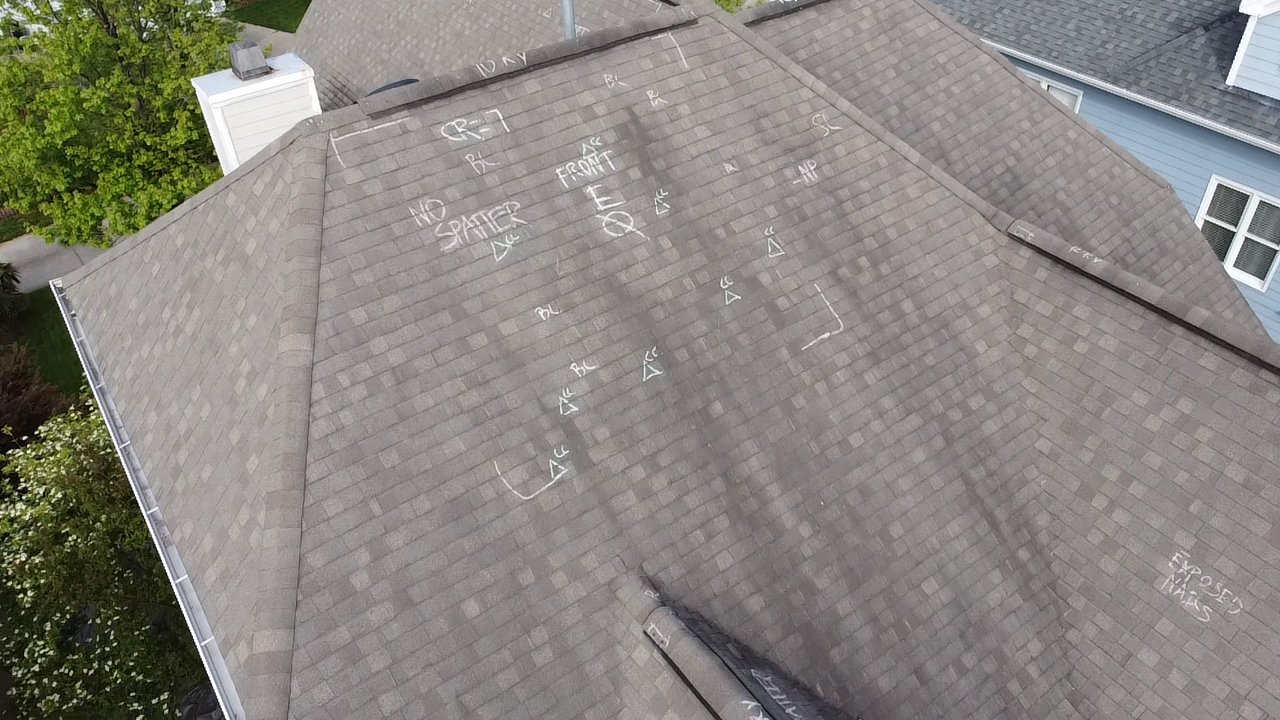
Hail Season in North Carolina Is No Joke
The Raleigh-Durham area sits in one of the most hail-active regions on the East Coast. From March through August, severe thunderstorms can produce hail ranging from pea-sized to golf ball-sized — and even small hail can cause damage that leads to major problems down the road.
The tricky part? Hail damage isn't always obvious. You might not see anything from the ground, but your roof could have hundreds of impact points that will shorten its life by years. Knowing what to look for — and when to call for help — is critical for every NC homeowner.
What Hail Does to Your Roof
Asphalt Shingle Damage
Hail impacts asphalt shingles in several ways:
- Granule displacement: Each hailstone knocks protective granules off the shingle surface, exposing the asphalt mat underneath. This accelerates UV degradation and aging.
- Bruising: The shingle may look intact from the ground, but a close inspection reveals soft spots where the fiberglass mat has been fractured beneath the surface.
- Cracking: Larger hail can crack shingles outright, creating immediate pathways for water intrusion.
- Seal strip damage: Hail can break the adhesive bond between shingle layers, making them vulnerable to wind lift.
Metal Roof Damage
Metal roofs handle hail better than shingles overall, but they're not immune:
- Denting: Cosmetic dents on standing seam panels or metal shingles
- Coating damage: Scratches or chips in the paint finish that can lead to corrosion over time
- Fastener loosening: The impact force can work fasteners loose on exposed-fastener systems
Other Areas to Check
Hail doesn't just hit your roof. After a storm, inspect these areas too:
- Gutters and downspouts: Look for dents, dings, and granule buildup in gutters (a sign your shingles took hits)
- Siding: Vinyl siding cracks easily from hail impact. Fiber cement and wood siding may show chips or dents.
- Windows: Cracked glass, damaged screens, and dented window frames
- AC unit: Dented condenser fins are a telltale sign of significant hail
- Deck railing, mailbox, and outdoor furniture: These "soft metals" show hail damage clearly
How to Inspect for Hail Damage (Safely)
What You Can Check From the Ground
Do this first — never climb on your roof after a storm.
- Walk the perimeter. Look for shingle pieces, granules, or debris on the ground.
- Check your gutters. Excessive granules in gutters or at downspout exits indicate shingle damage above.
- Look for dents on soft metals. Check your mailbox, gutter guards, flashing visible from the ground, and any aluminum trim.
- Inspect siding and windows. Walk all four sides of your home.
- Check your car. If your vehicles have hail dents, your roof almost certainly took hits too.
Signs You Need a Professional Inspection
Call a roofing contractor if you notice any of the following:
- Granule accumulation in gutters or at downspout exits
- Visible dents on gutters, flashing, or vents
- Cracked or missing shingles visible from the ground
- Dents on your HVAC unit, mailbox, or vehicles
- Neighbors are getting roof replacements after the same storm
- Your area was in a severe thunderstorm warning with reported hail
K&D Roofing provides free hail damage inspections throughout the Raleigh-Durham metro area. Our inspectors know exactly what adjusters look for because we've handled hundreds of hail claims since 2017.
What Does Hail Damage Actually Look Like Up Close?
Since you shouldn't be on your roof, here's what a professional inspector is looking for:
On Asphalt Shingles
- Random pattern of dark spots where granules have been knocked off — these are hail "hits"
- Soft spots that give when pressed with a finger (bruised mat)
- Exposed black fiberglass mat where granules are completely displaced
- Circular cracking around impact points on aged or brittle shingles
- Hits on hip and ridge caps — these are often the most exposed areas
On Flashing and Metal Components
- Dents on roof vents, pipe boots, and chimney flashing — these are easy-to-spot indicators
- Dented drip edge along the eaves
- Dents on valley flashing that can impede water flow
On Flat or Low-Slope Sections
- Dimpling on modified bitumen or rolled roofing
- Punctures in single-ply membrane systems (more common on commercial roofs)
The Hail Damage Insurance Claim Process
If an inspection confirms hail damage, the next step is filing an insurance claim. Here's a quick overview (for the full process, see our detailed guide on how to file a roof insurance claim in NC):
Timeline Matters
- NC policies typically give you one year from the date of loss to file
- File as soon as possible — delays can complicate your claim
- Document the storm date (your insurer will verify with weather data)
What Insurance Covers
Most NC homeowner policies cover hail damage to roofing, siding, gutters, and windows under the dwelling coverage portion. You'll pay your deductible, and insurance covers the rest.
Important: Some NC policies now include separate "wind/hail deductibles" that are higher than your standard deductible — often 1–2% of your home's insured value. Check your policy before filing.
Working With Your Adjuster
The insurance adjuster will come to your property to assess the damage. Having your roofing contractor present for this meeting is one of the most important things you can do.
At K&D Roofing, we attend adjuster meetings at no extra cost. We've found that when a knowledgeable contractor is present, the adjuster's damage assessment is more thorough and accurate. Our team has worked with every major insurance carrier in North Carolina.
How to Protect Your Roof From Future Hail
Impact-Resistant Shingles
If you're replacing your roof after hail damage, consider upgrading to Class 4 impact-resistant shingles. These are rated to withstand 2-inch hail (simulated by a steel ball drop test) and may qualify you for insurance discounts.
GAF offers impact-resistant options in their Timberline line, and as a GAF Master Elite contractor, K&D Roofing can install them with enhanced warranty protection.
FORTIFIED Roof Designation
For the ultimate storm protection, consider an IBHS FORTIFIED roof. The FORTIFIED standard addresses not just hail, but wind, rain infiltration, and the entire roof system. K&D Roofing is certified to install a FORTIFIED Roof™.
FORTIFIED roofs can also lead to meaningful insurance savings. Read more in our post on FORTIFIED roof insurance savings in NC.
Metal Roofing
If hail is a recurring concern in your area, metal roofing offers superior impact resistance. Thicker gauge standing seam systems can withstand repeated hail events with minimal cosmetic damage.
Common Mistakes After a Hail Storm
Waiting Too Long to Inspect
Hail damage is cumulative. Those granule-loss spots accelerate UV degradation, and within months, you may see premature aging, cracking, and leaks. Get your inspection done within days of the storm, not months.
DIY Roof Repairs
Patching a few shingles after hail damage might seem like a money saver, but it can actually hurt your insurance claim. If you modify the roof before an adjuster inspects it, you may lose evidence of the damage pattern that proves the claim.
If you have an active leak, contact us for emergency roof repairs — we'll document everything for your claim.
Hiring Storm Chasers
After major hail events in the Triangle, out-of-state contractors flood the area. They knock on doors, offer "free" inspections, and promise to handle everything. Many do substandard work and disappear when warranty issues arise.
Choose a local, licensed contractor with a track record. K&D Roofing is veteran-owned, Raleigh-based since 2017, and backed by 4.9 stars from 312 reviews. We live and work in this community.
Schedule Your Free Hail Damage Inspection
If your area recently experienced hail — or you suspect your roof may have undetected damage from a past storm — don't wait. Early detection protects your home and preserves your insurance options.
Call K&D Roofing at (919) 977-4074 or book your free inspection online. We serve Raleigh, Durham, Cary, Apex, Wake Forest, Holly Springs, Garner, and the entire Triangle.